


Plenary Speakers
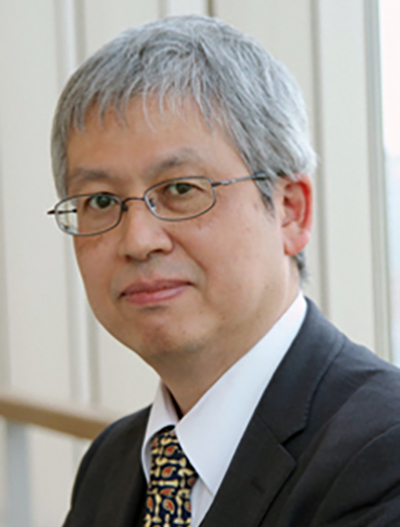
Nobuya Mori (The University of Osaka)
Bridging Semiconductor Physics and Device Engineering: From Crystal Anisotropy to Efficient Quantum Transport
Nobuya Mori received his Ph.D. degree in electronic engineering from Osaka University, Osaka, Japan, in 1991. He subsequently joined the faculty at Osaka University, where he has been a Professor with the Division of Electrical, Electronic and Infocommunications Engineering since 2015. He also holds an appointment as an Honorary Professor with the School of Physics and Astronomy at the University of Nottingham, Nottingham, U.K. His research interests include semiconductor physics and the modeling of quantum effects in ultrasmall semiconductor devices. He has served as Chair for several international conferences, including the 2013 International Workshop on Computational Electronics (IWCE), the 2014 International Conference on Simulation of Semiconductor Processes and Devices (SISPAD), and the 2019 International Conference on Electron Dynamics in Semiconductors, Optoelectronics and Nanostructures (EDISON). He is a Fellow of the Japan Society of Applied Physics.
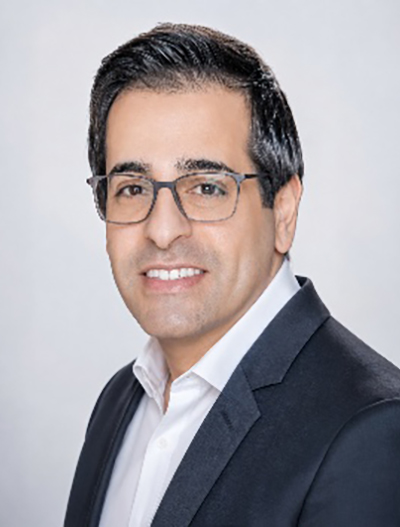
Farzan Jazaeri (Swiss Federal Institute of Technology in Lausanne (EPFL))
The EPFL Cryogenic MOSFET Model
Dr. Farzan Jazaeri received his Ph.D. in Microelectronic Engineering from EPFL, Switzerland, in 2015. Since 2015, he has been a Research Scientist and Project Leader at EPFL, and since 2019 a Senior R&D Semiconductor Device Engineer at EM Microelectronic, a Swatch Group company. He was later offered an Assistant Professor position at TU Delft, but chose to pursue other opportunities.
His research focuses on solid-state electronics, semiconductor device physics, and emerging technologies. He co-developed the EPFL HEMT Model for GaN HEMTs and developed the EPFL-JL Model for nanowire FETs. He co-authored the first book on junctionless FET modeling and design (Cambridge University Press, 2018), contributed to the Springer Handbook of Semiconductor Devices, and has published over 150 peer-reviewed papers.
His honors include the IEEE Electron Devices Society George E. Smith Award in 2018 and 2020, the MIXDES Best Talk Award, and ESSDERC Best Paper Awards. He also received an advanced Swiss National Science Foundation fellowship for research at MIT and NASA.
He serves as an editor and reviewer for scientific journals and has received multiple invitations as a keynote speaker and IEEE Electron Devices Society Distinguished Lecturer.
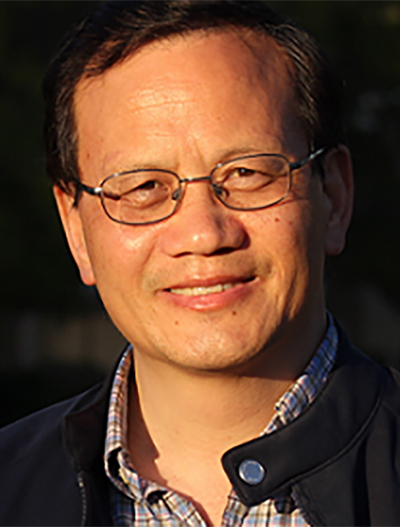
Xi-Wei Lin (Synopsys Inc.)
From Atom to System: Multi-scale Thermal, Mechanical, and Reliability Modeling of Advanced Packages for AI
Xi-Wei Lin is Executive Director, Applications Engineering, from Synopsys Inc., responsible for technology modeling and simulation applications and global supports for logic and memory technologies. He previously worked at Micron Technology, LSI Logic, Philips Semiconductors, and Lawrence Berkeley National Laboratory, in the fields of materials science and engineering, CMOS process technology development, as well as advanced IC and memory designs, DTCO, and STCO, involving physical implementation, power optimization, circuit verification, 3DIC, and device modeling for advanced logic, DRAM, and NAND flash memory. He published 80+ papers and holds 120+ U.S. patents. He received his Ph.D. degree from University of Paris - Sud at Orsay and B.S. degree from Peking University.